Connecting Science to Communities: Dr. Bridget Bannerman’s Mission to Deliver Health Equity
At four each morning in Sierra Leone, before daylight and long before school, Bridget Bannerman was awake. By five, she and her siblings were dressed, books open. Their father, a single parent and educationist who worked through the country’s passage from colonial rule into independence, believed education could enlarge life. He supervised his children’s progress with a rigour plainly rooted in faith.
Bridget loved chemistry and mathematics, but the world beyond her textbooks disturbed her. She saw people dying amid weak health systems. As a teenager, she lost a close relative after an illness marked by excessive sleeping, symptoms she later associated with African sleeping sickness.
“Something is wrong,” she remembers thinking. “Everyone should do something about this.”
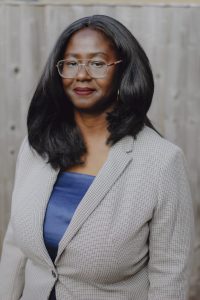
That disquiet became a method. After university, Bannerman worked at the Medical Research Council and the International Trypanotolerance Centre in The Gambia, studying human African trypanosomiasis. While completing a master’s degree in bioinformatics, she devised a protocol for identifying new drug targets and sent it, uninvited, to Professor Sarah Melville at University of Cambridge. The reply startled her; the pathway she had mapped closely matched research already underway. She came to Cambridge, helped build an international research resource, and pursued a PhD into the genes and proteins that distinguish disease-causing organisms from harmless relatives.
She had entered the field at a moment when sleeping sickness was beginning to yield; not to a single discovery, but to the slow alignment of surveillance, drug development, field programmes and political will. According to the WHO Global Health Observatory, between 1999 and 2025, reported cases of the chronic Sleeping Sickness, fell by 98 percent. For Bannerman, such progress poses an implicit rebuke; if concerted science can push one lethal disease towards elimination, why are other preventable deaths still tolerated?
But even as she pursued this new challenge in Cambridge, her attention kept returning home. Years after Sierra Leone’s civil war, she found school laboratories depleted and science reduced, too often, to textbook procedures. Driven by the need to change this, in 2012 she began the workshops that became Science Resources Africa, connecting secondary school students with university lecturers and asking them to apply scientific principles to problems around them. One student installed solar panels in roughly fifteen schools where children had been studying without electricity, shifting homework from dim kerosene light to a more reliable glow. Through education and long-term mentoring, the organization estimates it has reached multiple students and community members across several countries, and helped strengthen research capacity in places such as Guinea-Bissau.
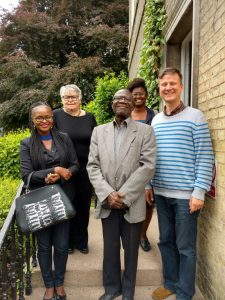
Science Resources Africa began as a response to empty laboratories, but Bannerman gradually came to see that the deeper shortage was not always knowledge itself. It was the failure of knowledge to travel: from universities into classrooms, from surveillance systems into clinics, and from global institutions into forms that communities could trust and use. She became what she calls a connector; between pathogens and people, African researchers and international science, discovery and delivery. In that sense, cervical cancer was not a departure from her earlier work. It was its logical extension.
Her scientific career had been rooted in infectious disease: in understanding how parasites, bacteria and viruses become pathogenic, how they spread, and how surveillance and treatment can interrupt them. Cervical cancer offered a stark variation on the same problem. Almost all cases arise from persistent infection with high-risk forms of human papillomavirus, or HPV, an infectious agent capable of driving cancer. But unlike many diseases she had studied, this one came with an unusually complete set of defences: vaccination can prevent infection, screening can detect precancerous changes, and timely treatment can stop them from becoming cancer. What troubled Bannerman was the distance between having those tools and ensuring that women could actually benefit from them.
“No woman should die from a cancer that is largely preventable,” she says, “simply because she lacks access to information, services, technology or timely care.”
In Sierra Leone, that distance is measurable. The International Agency for Research on Cancer estimated 721 new cases and 439 deaths in 2024, making cervical cancer the country’s second most common cancer among women. Bannerman’s project occupies the difficult middle ground between a policy announced and a life saved. Through community workshops, teacher and health-worker training, links to vaccination and screening services, and DIHESA®, her surveillance platform, the initiative is intended to track what formal targets often miss: what women know, whether services are accessible, where follow-up breaks down, and why some communities remain beyond the reach of scientific progress.
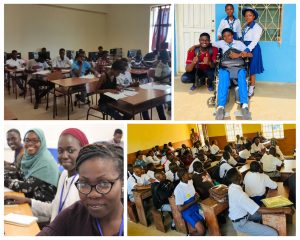
The timing is consequential. Sierra Leone has moved rapidly: screening expanded from four districts to all 16 by November 2025, with 25 centres operating and more than 33,000 women screened. A national campaign then vaccinated more than one million girls, 116 percent of its initial target. Unfortunately however, coverage figures cannot measure every hesitation, mistrust, stigma, transport costs, or the woman who understands the message yet cannot complete the journey to treatment. This is where Bannerman locates her work; not in opposition to national systems, but inside their unfinished spaces.
Her own progress has carried invisible costs. A single mother, she declined opportunities, including a role in France that might have strengthened her Sierra Leone work, when her children were at a critical stage. Her father and elder brother, the two men whose confidence most shaped her, have both died. She speaks of their belief not as nostalgia but as an obligation passed forward.
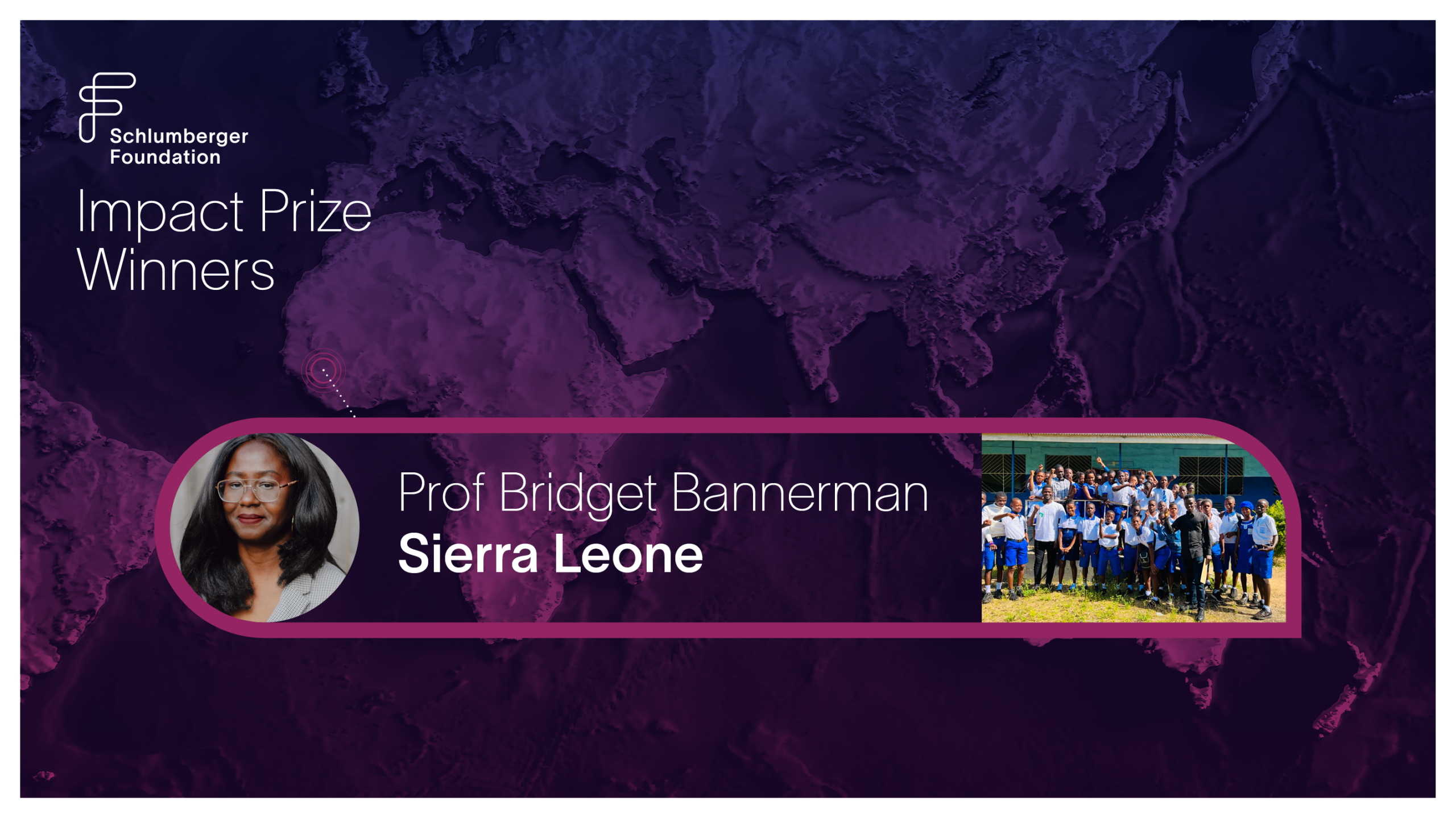
An obligation she carried into her purpose and career; an obligation that got her recognized with the Faculty for the Future Impact Prize. A prize that will fuel her plans to expand reach of her initiative beyond 50,000 women, students and community members.
When Bannerman joined an online meeting in Cambridge to hear the outcome of the Impact Prize, she had her application papers ready, expecting another interview. The news produced shock, delight and then a quieter response: “Oh, finally.” It was less triumph than recognition of accumulation; years of research, mentoring, travel and choices that professional biographies rarely record.
Her career has been an argument against confusing persistence with inevitability. “It pains me when diseases go unattended to that can easily be solved,” she says. A disease may remain in the statistics for decades; that does not mean it belongs there.